When you’re asked to decorate for a globally celebrated cultural festival with centuries of spiritual and symbolic meaning, you don’t just go shopping for colourful props. You go to school first.
That’s exactly what we did when we were commissioned to decorate sections of the Hub Mall in Karen for Diwali Party in Kenya 2020. The brief was to bring the Festival of Lights to life in a public retail space: Joyful, vibrant, culturally respectful, and accessible to every shopper who walked through those doors, regardless of whether they’d ever celebrated Diwali before.
Here’s the full story of how we researched, designed, and delivered it, and what this event tells you about what culturally intelligent event decor really looks like.
| QUICK FACTS | |
| Event Type | Cultural Festival Activation — Public Retail Space |
| Client | Hub Mall, Karen, Nairobi |
| Our Role | Full décor design and installation across multiple mall zones |
| Festival | Diwali 2020 — the Hindu Festival of Lights, celebrated on Saturday 14th November 2020 |
| Theme | Diwali — light over darkness, good over evil, wisdom over ignorance |
| Key Design Elements | Coloured ribbon walkway, fairy lights, Chinese lanterns, wall rangoli, mehndi corner with caramel pouffes |
| Design Challenge | Culturally accurate interpretation of a multi-faith festival in a public, non-denominational retail environment |
| Standout Moment | Creating a wall rangoli — a format we’d never attempted before — from scratch, and getting it right |
We’re Event Planners in Kenya — Talk to Us About Your Next Event
Understanding the festival before touching a single prop
The first thing we did when we received this brief wasn’t to plan the decor. It was to understand what Diwali actually is, not at a surface level, but with enough depth to make respectful, informed design decisions.
Diwali is one of the most widely celebrated annual festivals in the world. Known as the Festival of Lights, it marks the triumph of light over darkness, good over evil, and wisdom over ignorance. But what makes it genuinely fascinating is that it isn’t a single story. Different communities celebrate it for different reasons, and each interpretation carries its own symbolism.
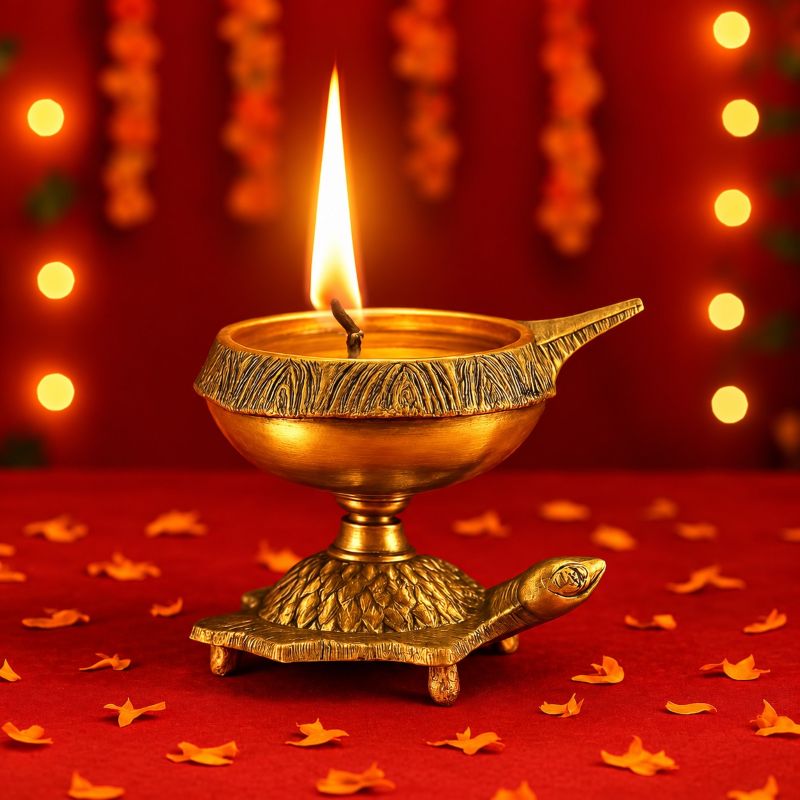
Diyas, small clay oil lamps, are among the most powerful symbols of Diwali, representing knowledge, enlightenment, and spiritual guidance.
For Hindus in North India, Diwali commemorates the return of Lord Rama from fourteen years of exile after his defeat of the demon Ravana. In South India, it marks Lord Krishna’s victory over the demon Naraka. For Jainists, it honours the spiritual enlightenment of Lord Mahavira. For Sikhs, it’s tied to the liberation of Guru Nanak from captivity, a story about the courage of a community that refused to be silenced.
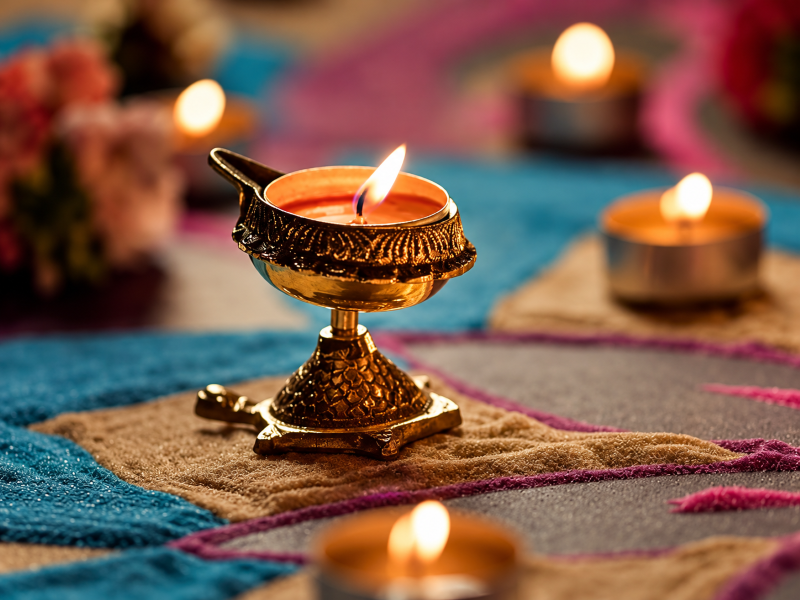
What all these traditions share is the diya, a small clay oil lamp that carries layered meaning across every interpretation of the festival. Diyas represent knowledge, the presence of the divine, and the guiding of light toward those who seek it. On Diwali night, they’re placed inside homes and outdoors to attract the blessings of Lakshmi, the goddess of wealth, and Ganesh, the god of wisdom and good fortune.
The festival runs across five days, with the third day, Diwali itself as the centrepiece. The five days move from Dhanteras (the day of fortune) through to Bhai Duj (the day of love between siblings), with the main night falling on the new moon of the Hindu month of Kartika, usually in late October or early November.
Understanding all of this before we designed a single element meant that every choice we made had a reason behind it and that nothing we put into the space accidentally contradicted or trivialised what the festival actually means to the communities who celebrate it.
The challenge
A public shopping mall is a specific and demanding canvas for a cultural festival installation. You’re designing for everyone, families who celebrate Diwali and will notice immediately if something is off, and shoppers who’ve never encountered the festival before and need the space to be welcoming and legible without being a lecture.
The brief asked for vibrancy and light, the visual language of Diwali while being sensitive to the symbolic weight of the elements we’d be working with. Diyas, for instance, are deeply significant in Hinduism. Using them decoratively without context, or placing them in ways that felt arbitrary, wasn’t something we were willing to do. Every element had to earn its place.
The November weather added a practical layer of complexity. Nairobi in November can be unpredictable, and working across the mall’s walkways and open zones meant we had to design with the elements in mind, opting for materials and installations that would hold up regardless of what the sky decided to do.
And then there was the rangoli. Rangoli is one of the most visually iconic elements of Diwali, an elaborate decorative pattern traditionally made on the floor using coloured rice, sand, or flower petals. It’s a symbol of welcome, prosperity, and auspiciousness. Leaving it out wasn’t an option. But the mall’s floor surfaces and foot traffic made a traditional floor rangoli impractical. We’d have to put it on a wall. Something we’d never done before.
What we created
The walkway: Light and colour as a welcome
The mall’s walkways were the first thing every visitor encountered, so we treated them as the opening statement of the entire installation. We lined them with colourful ribbons to create a sense of movement and celebration, layered with fairy lights that gave warmth and glow regardless of the outdoor light conditions. Colourful Chinese lanterns added height and a visual pop of colour that drew the eye upward and created a sense of occasion.
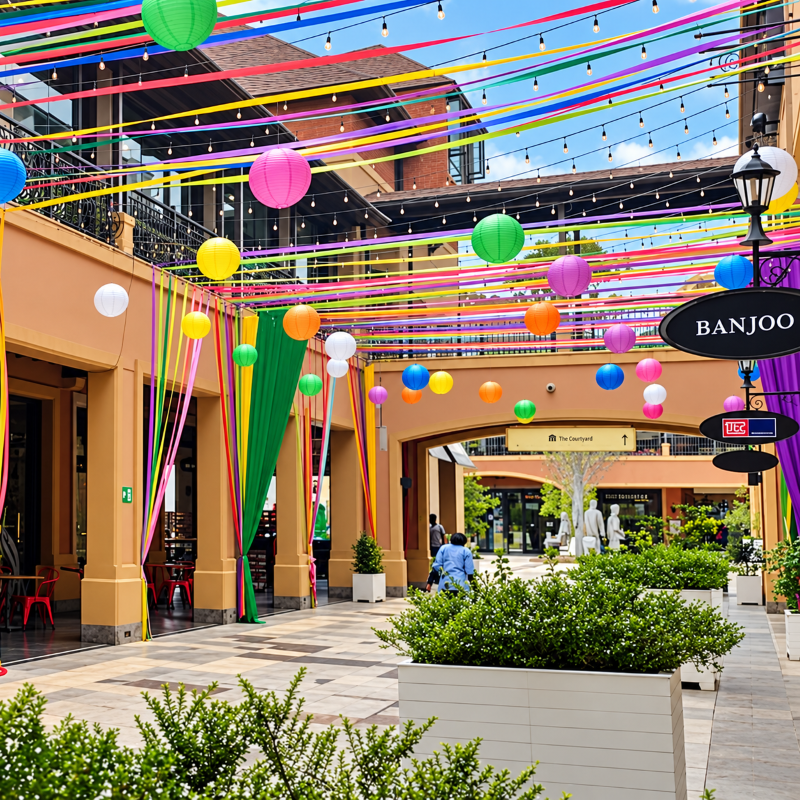
The Diwali walkway at the Hub Mall, ribbons, fairy lights, and lanterns turning a retail corridor into a festival entrance.
The walkway was deliberately designed to feel inclusive, joyful and inviting for every shopper, not just those familiar with Diwali. Light and colour are a universal language, and in a public space, that was the right instinct.
The wall rangoli: Doing what hadn’t been done before
This was the element we were most nervous about and most proud of. A rangoli had to be part of the installation because it’s too central to Diwali’s visual identity to omit. But a floor rangoli in a busy mall walkway wasn’t feasible. It would be walked over, damaged, and potentially disrespectful to a symbol that carries real meaning.
So we adapted. We created a wall rangoli a format that, to our knowledge, isn’t standard practice. Traditional rangoli is always horizontal. Taking it vertical meant redesigning the entire approach to how the pattern would be built, coloured, and fixed to the surface. We had a few early attempts that didn’t work. We kept going. We used assorted paints to bring the pattern to life on the wall, and by the time we stepped back, it was exactly what the space needed.
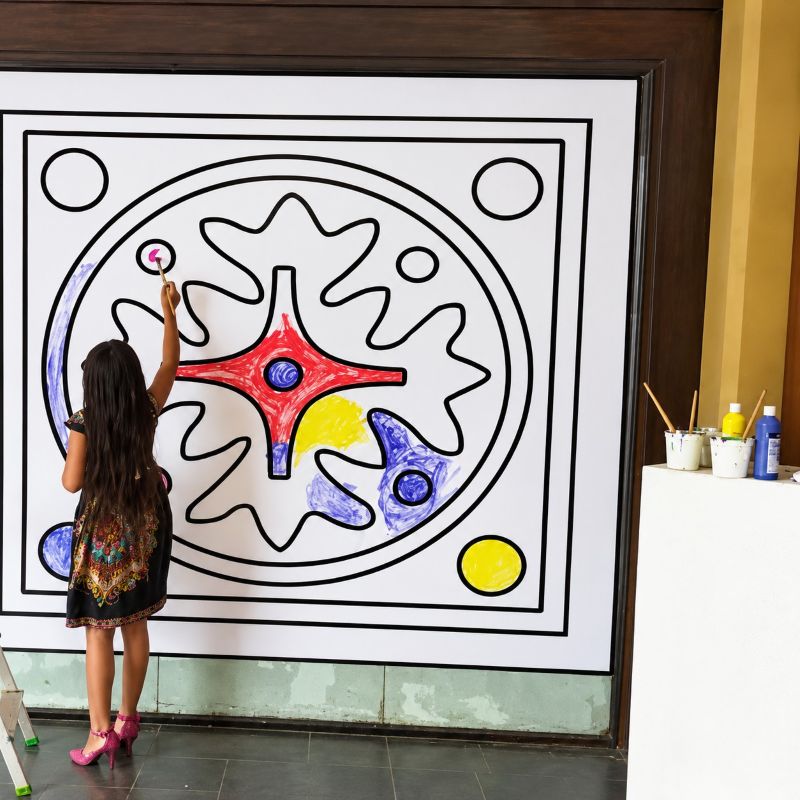
The wall rangoli. Non-standard, never-done-before, and entirely worth the effort.
Getting the rangoli right mattered to us for more than aesthetic reasons. It’s a symbol of welcome and auspiciousness, the gesture of a host preparing their space for something meaningful. In a mall context, it was our way of saying to every visitor who walked past: this festival is being taken seriously here.
The mehndi corner: An experience, not just a display
Alongside the walkway and the rangoli, we set up a mehndi corner where shoppers could have traditional henna motifs drawn on their hands, flowers, stars, water drops, spirals, and leaves. Mehndi is a significant art form in South Asian culture, used at weddings, festivals, and celebrations as a symbol of joy, beauty, and blessing.
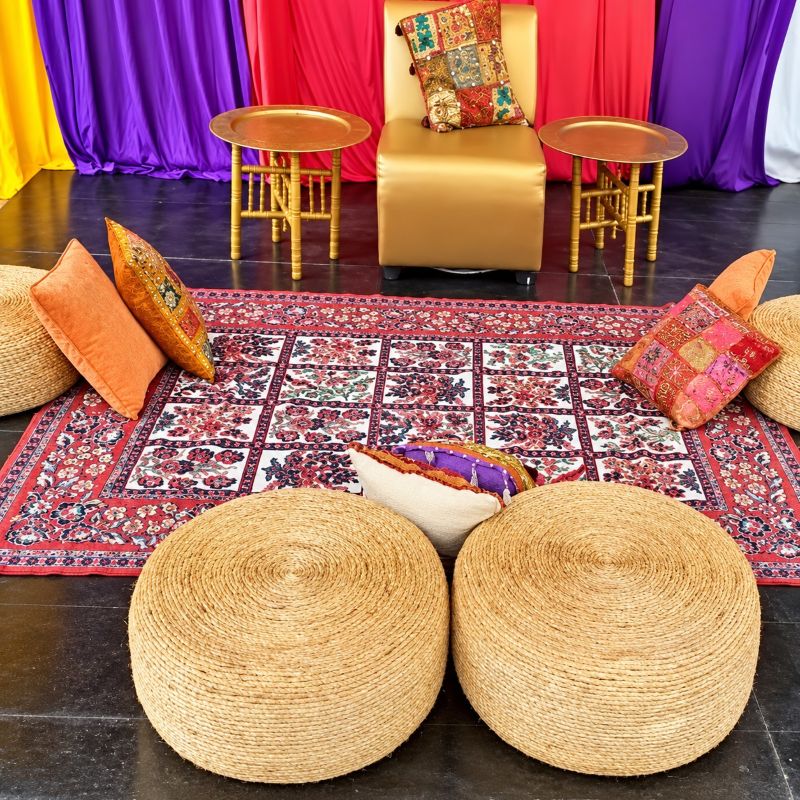
The mehndi corner was a hands-on experience that brought shoppers into the festival rather than just past it.
For seating, we brought in our repurposed caramel pouffes, a piece from our inventory that turned out to be a natural fit. Their warm tones and texture sat perfectly within the Diwali palette, and their low, relaxed profile suited the intimate, one-to-one nature of the mehndi experience. It’s the kind of detail that matters: a seating choice that felt considered rather than convenient.
The mehndi corner was one of the most talked-about elements of the installation. It turned passive foot traffic into active participation, exactly what a public cultural activation should do.
The result
The Hub Mall Diwali installation worked because it was built on genuine understanding. Every element, the walkway, the rangoli, the mehndi corner, the diya references was chosen with knowledge of what it means, not just what it looks like. That’s the difference between cultural celebration and cultural decoration.
“The installation was beautiful and clearly very well researched. Our Indian community shoppers were impressed that the symbolism had been handled with such care, and for shoppers who weren’t familiar with Diwali, it was genuinely educational as well as joyful. Lucidity Africa understood the brief completely.”
This is what we mean when we say we’re versatile. It’s not just about having an inventory and a team. It’s about having the intellectual curiosity to learn what a brief actually requires, and the creative range to execute it properly.
What you can take from this
If you’re planning a culturally specific event whether it’s Diwali, Eid, Chinese New Year, or any celebration rooted in traditions that aren’t your own, the research has to come before the design. Every festival has elements that carry real symbolic weight, and getting those wrong even unintentionally can undermine the entire event. The communities being celebrated will notice. And they deserve to see their traditions handled with the same rigour and respect that any planner would bring to their own cultural context. Hire a team that asks questions before they pick up a prop.
The second lesson is about the power of participation. The mehndi corner transformed a passive visual experience into something people physically engaged with.
In a public space, that’s the difference between an installation people photograph and one they remember. If your event has any opportunity to invite active participation, take it. It’s always worth the extra planning.
Planning a Diwali party in Kenya? Here’s what to know
The essential Diwali decor elements
Diwali decor is built around light, colour, and symbolic objects. These are the elements that matter most and what each of them means.
| DIWALI DECOR ELEMENTS AND THEIR MEANING | ||
| Element | What It Is | What It Means |
| Diyas | Small clay oil lamps | Knowledge, enlightenment, and the presence of the divine. Guide Lakshmi’s blessings toward the home. |
| Rangoli | Elaborate floor (or wall) patterns in coloured rice, sand, or petals | Welcome, prosperity, and auspiciousness. A gesture of hospitality to guests and deities. |
| Mehndi / Henna | Intricate hand motifs applied with henna paste | Joy, beauty, and blessing. A celebration art form used at festivals and weddings. |
| Torans | Decorative door hangings of marigolds and mango leaves | Welcome and good fortune. Traditionally hung at the entrance of homes during Hindu festivals. |
| Fairy lights and lanterns | String lights, Chinese lanterns, glass bottle lights | The symbolic triumph of light over darkness — the heart of Diwali’s meaning. |
| Floating candles | Candles set in water bowls with petals and beads | Warmth, celebration, and the beauty of light reflected. |
What to think about when planning
Before you finalise your Diwali decor brief, consider a few things. First, who is your audience? If you’re decorating for a community that celebrates Diwali, accuracy and cultural sensitivity matter enormously. If you’re decorating for a mixed audience in a public space, accessibility and inclusivity should shape how you frame each element. Both can be done well but they require different thinking.
Second, check the weather. November in Nairobi can be unpredictable, and Diwali typically falls in late October or early November. If any of your installation is outdoors or in an open space, plan for rain. Use ribbons, lights, and lanterns that can handle moisture, and have a contingency for any paper or flower-based elements.
Third, think about participation. Diwali is a festival of joy and community. The more your installation invites people to engage through a mehndi station, a rangoli-making activity, a photo moment, a craft corner the more it will be remembered.
Planning a Diwali event or cultural celebration in Kenya?
Whether you’re organising a Diwali activation for a retail or corporate space, a community celebration, or a private party, we’d love to help you get it right from the research stage through to the final installation.
We bring the same cultural rigour and creative precision to every brief, regardless of the tradition it comes from. That’s what versatility actually looks like.