
Congratulations. The ring is on your finger, the euphoria is real, and the weight of everything that lies between now and the wedding day is just beginning to make itself known.
Wedding planning in Kenya is one of the most rewarding and most complex undertakings you’ll ever manage. There’s a traditional ceremony before the white wedding. There are two families with expectations, a guest list that somehow keeps growing, vendors to find and vet across a dozen categories, a budget to protect, and a thousand details that all need to land correctly on the same day.
This guide is the most comprehensive wedding planning resource in Kenya. It covers the full journey from the week after the proposal to the morning after the wedding, with timelines, budgets, printable checklists, traditional ceremony guidance, vendor strategy, and the practical wisdom we’ve built over twelve years of planning and delivering weddings and events across the country.
Read it once to understand the full picture. Then come back to each section as your planning progresses. The checklist tables are designed to be printed and used as working documents. Consider this your wedding planning headquarters.
| WHAT’S IN THIS GUIDE | |
| Section | What You’ll Find |
| 1. Before You Start Planning | Budget framework, guest list strategy, assembling your team |
| 2. The Traditional Wedding | Kenya’s major ceremonies, cultural expectations, legal requirements |
| 3. The Full Planning Timeline | 33 steps from 8 months out to the morning after |
| 4. The Master Checklists | Printable checklists by planning phase, ready to use |
| 5. Choosing and Managing Vendors | How to find, vet, brief, and contract every vendor category |
| 6. Decor and Design | How to brief your stylist and create a coherent look |
| 7. The Wedding Day Framework | A run-sheet structure to keep the day on track |
| 8. Alternatives: Elopements and Intimate Weddings | When a smaller, more intentional experience is the right answer |
| 9. Working With Lucidity Africa | What we offer, how we work, and why it matters |
We’re Wedding Planners in Kenya — Book a Free Consultation
1. Before you start planning
The biggest mistake newly engaged couples make is jumping straight into vendor research before they’ve answered the three questions that shape every decision that follows. How much are we spending? Who is coming? And what kind of experience do we actually want? Answer these first. Everything else follows.
Setting your budget
Your budget is the first thing to agree on and the last thing to stop tracking. Build it in three layers: the total envelope (the absolute maximum across all events), the event allocations (split across traditional wedding, white wedding, honeymoon, and pre-wedding events), and the category budgets within each event (venue, catering, decor, photography, attire, entertainment, logistics). Every vendor quote goes against a specific line.
Planner’s tip: Set aside 10–15% of your total envelope as a contingency fund before you allocate anything else. Wedding planning consistently surfaces unexpected costs. A buffer means you absorb them without compromising the things that matter most.
| WEDDING BUDGET BENCHMARKS — KENYA (DECOR, PLANNING AND STYLING) | ||
| Tier | Typical Range | What It Delivers |
| Modest | Kshs 300K – 800K | Clean setup, standard furniture, basic florals, good tent. Feels well-organised and considered. |
| Mid-range | Kshs 800K – 2.5M | Custom florals, premium furniture, styled tablescaping, professional coordination. Feels genuinely beautiful. |
| Premium | Kshs 2.5M – 7M | Bespoke design, statement pieces, lush florals, full-service planning. Feels extraordinary. |
| Luxury | Kshs 7M+ | No creative ceiling. Custom everything, premium suppliers across all categories. |
These ranges cover decor, planning, and styling only. Your total budget also includes catering, venue hire, photography, entertainment, attire, and all other services. We build full itemised budgets for every client from the first consultation.
View Our Wedding Planning in Kenya Packages for 2026
Building your guest list
Your guest list drives every practical decision: venue size, catering quantity, furniture count, invite spend, and parking logistics. Build it early and protect it firmly. Lists that grow uncontrolled are one of the most common reasons weddings go over budget.
Build in tiers: Tier 1 is non-negotiable (immediate family, closest friends). Tier 2 is important but manageable. Tier 3 is optional. Fill from the top down until you hit your number.
Planner’s tip: Your traditional wedding and white wedding will likely have different guest lists. The traditional ceremony typically involves a tighter circle. Your white wedding is where the list expands. Plan both separately from the start.
Assembling your planning team
Identify who is helping you plan before you start planning. Your bridal team, a family coordinator for logistics, a budget keeper, and your wedding planner if you’re using one. Establish early who owns what. The earlier you have this in place, the less duplicated effort and missed items later.
Considering a Professional Wedding Planner? Here’s What We Offer
2. The traditional wedding in Kenya
In Kenya, the traditional wedding precedes the white wedding and in many families, it’s the more emotionally significant of the two. It’s the ceremony where both families formally come together, bride price is negotiated, and cultural identity is most fully expressed. Each community has its own traditions.
| KENYA’S MAJOR TRADITIONAL WEDDING CEREMONIES | ||
| Community | Ceremony | What Happens |
| Kikuyu | Ruracio / Kuhanda Ithigi | Kuhanda Ithigi is the earlier ceremony where the groom’s family formally declares their intentions. Ruracio is the full bride price negotiation that follows. Both are significant occasions at the bride’s family home. |
| Luo | Nyombo | The groom’s family presents gifts and negotiates bride price. Traditional songs, dance, and the formal handing over of the bride. |
| Luhya | Traditional Wedding | Bride price (Isiala) is negotiated by elders from both sides. Communal food and music throughout. |
| Kamba | Ndheo Ngasya | Cattle and goods presented by the groom’s family. Negotiations conducted by appointed family spokespeople. |
| Kalenjin | Koito | Structured bride price negotiation, often involving livestock. Marks formal recognition of the union by both families. |
| Coastal / Swahili | Harusi | Multi-day celebration with Islamic customs at its core: the Nikah (marriage contract), Arusi (celebration), and elaborate decor traditions. |
| Mijikenda | Traditional Ceremony | Bride price negotiations, elder blessings, and communal celebration with music and dance at the centre. |
Planner’s tip: Traditional weddings are often less elaborate in decor than the white wedding, but expectations are high and in-laws are paying close attention to how prepared your family is. Invest in a good tent, proper furniture, and at least one statement table setup. First impressions at this event set the tone for everything that follows.
See How We Styled Muthoni’s Kuhanda Ithigi in Buru Buru
Legal requirements for marriage in Kenya
| LEGAL MARRIAGE REQUIREMENTS — KENYA | |
| Requirement | Details |
| Notice period | Written notice must be given at least 21 days before the ceremony to the Marriage Registrar at the Attorney General’s chambers. |
| Documentation | Original national ID or passport for both parties, two passport photos each, and the registration fee. |
| Witnesses | At least two witnesses must be present at the civil or religious ceremony. |
| Marriage certificate | Issued after registration. Keep multiple certified copies because you’ll need them for name changes, bank accounts, and travel documents. |
| Name change | The marriage certificate is the primary document for all subsequent updates: national ID, passport, KRA PIN, bank accounts. |
| Where to apply | Office of the Attorney General, State Law Office, Harambee Avenue, Nairobi. Also available at county registrars. |
We’re Wedding Planners in Kenya — Talk to Us
3. The complete wedding planning in Kenya timeline
We recommend starting your white wedding planning at least eight months before the date. This accommodates the traditional ceremony, all vendor confirmations, attire preparation, legal requirements, and the final checks in the weeks before the day.
Eight months out: Foundations
Step 1 — Set your budget and event overview
Agree on your total envelope with your spouse and both families. Allocate across events. Build your 10–15% contingency before any other allocation. Write it down and share it with anyone contributing financially.
Step 2 — Build your preliminary guest list
Start with must-have guests only. Having a working number early shapes every subsequent budget and venue decision. You’ll refine it several times.
Step 3 — Choose your bridal team
Give your bridal team as much notice as possible. They’ll be present at every event from now until the wedding day. Choose reliability and warmth over obligation.
Step 4 — Create your vision board
Build a visual reference before you approach a single vendor. Gather inspiration from Pinterest, Instagram, and real Kenyan weddings. Your vision board is the briefing document for every creative vendor you hire.
Step 5 — Shortlist Tier 1 vendors
Begin researching photographer, venue, caterer, decor planner, and officiant. Don’t book yet, build a shortlist of at least three options per category. Read reviews, look at real work, ask for referrals.
Step 6 — Begin traditional wedding planning
Engage family elders from both sides early. Understand the expectations, agree on a date, and start planning the guest list, catering, and setup for the traditional ceremony separately from the white wedding.
Step 7 — Book your wedding planner
The best planners in Nairobi fill their calendars quickly, especially for peak season dates in December, August, and around Easter. Booking early means your planner joins you at the strategy stage, not just the execution stage.
Planner’s tip: A planner hired eight months out saves you money. They help you build your budget, vet vendors, negotiate contracts, and avoid the expensive mistakes most DIY couples make in the first three months.
Step 8 — Research and visit venues
Visit at least six venues before committing. Attend at the time of day your event will run. Ask about exclusive use, catering policies, tent regulations, parking, power supply, washrooms, and wet weather contingency. Top venues in Nairobi and around Kenya book fast.
Proven Steps to Choosing Your Wedding Venue in Kenya
Step 9 — Discuss the honeymoon
Agree on a destination, duration, and budget. If travel documents need renewal or visas are required, begin that process now. December bookings in particular need to be made months in advance.
Step 10 — Plan your pre-wedding shoot
Your pre-wedding photos go on save-the-dates, invites, decor signage, and social media throughout the planning journey. Brief your photographer well, choose a meaningful location, and invest in the styling.
Five months out: Locking In the vision
Step 11 — Finalise your theme, palette, and design direction
Lock in your colours, overall aesthetic, and mood. Share your finalised vision board with your decor planner and florist. The sooner they have a definitive brief, the better the result. Indecision at this stage costs money later.
Step 12 — Refine and lock the guest list
Your definitive guest list should be in place by now. Share it with your venue, caterer, and rentals vendor to confirm capacity requirements.
Step 13 — Send save-the-date invites
Get save-the-dates out as soon as your guest list is confirmed and pre-wedding photos are ready. Aim for five months before the date. Give guests travelling from outside Nairobi maximum notice.
Three months out: Booking and briefing
Step 14 — Book all tier 1 and tier 2 vendors
Send your finalised brief, guest numbers, venue, and proposed budget to every vendor on your shortlist. Review quotes carefully, select your preferred vendors, and sign contracts. No verbal agreements.
Step 15 — Finalise attire and schedule fittings
Wedding dress, groom’s outfit, and wedding party attire need to be confirmed and in production by now. Schedule fitting appointments with enough time for alterations.
Step 16 — Source and book your beauty team
Get referrals, review portfolios for skin tones and styles similar to yours, and book your hair and makeup artist. Brief them on your palette, theme, and attire. Insist on a trial run.
Step 17 — Buy the wedding bands
Allow at least eight weeks for custom or engraved bands. Do a proper fitting. Confirm your order and payment timeline in writing.
Step 18 — Book and brief the officiant
Meet your officiant in person with your spouse. Brief them on ceremony format, personalised elements, program timing, and any family sensitivities.
Step 19 — Set quality standards with every vendor
Document exactly what you expect from each vendor. Request samples: DJ playlists, decorator mock-ups, caterer tastings, florist sample centrepieces. Capture everything in the contract.
Planner’s tip: Trust your vendors but verify everything. A venue site visit two weeks before the wedding to confirm maintenance and caterer preparation is never wasted.
One month out: Final preparations
Step 20 — Apply for the marriage certificate
Give written notice to the Marriage Registrar. This must be done at least 21 days before the ceremony. Don’t leave this to the last week.
Step 21 — Send formal wedding invitations
Include venue directions, dress code, RSVP deadline, and any logistical information guests need: parking, shuttles, dress code for outdoor venues.
Step 22 — Conduct a mock setup with your decor and floral vendors
Before the wedding day, request a tabletop or full mock setup. Check centrepiece heights, linen drape, floral colours, and table flow. Changes are still possible now. They’re not possible on the morning of the wedding.
Step 23 — Caterer and baker tasting
Confirm final menu selections, portion sizes, and service format. Taste everything. Confirm arrangements for dietary restrictions, allergies, and children.
Step 24 — Commission menu cards and table numbers
Menu cards, table numbers, place cards, and any printed elements should be in production this week. Confirm the final guest count with your printer and furniture vendor at the same time.
Step 25 — Track RSVPs actively
Appoint a dedicated person to manage RSVPs and update the definitive count weekly. This number feeds your caterer, furniture vendor, and venue.
Step 26 — Sign all outstanding vendor contracts
Every vendor should have a signed contract before the month is out. No exceptions. Contracts define deliverables, confirm payment terms, and protect both parties.
Two weeks out: Precision mode
Step 27 — Final RSVP close
Close your RSVP list and share the definitive headcount with your caterer, baker, and furniture vendor. This is the number you honour.
Step 28 — Write your vows
Set aside a quiet hour. Write honestly. Practice reading them aloud. Print them in a font large enough to read when you’re nervous.
Step 29 — Build the wedding day program
Create a detailed program and share it with your MC, DJ, photographer, videographer, and officiant. Every vendor needs to know what’s happening, in what order, and who they’re watching for cues from.
Step 30 — Full vendor briefings
Brief your MC on family names, sensitivities, program changes, and cue structure. Brief the photographer and videographer on the shot list and family groupings. Brief the DJ on timing coordination with the MC.
One week out: Celebrate, rehearse, rest
Step 31 — Host a bridal team brunch or luncheon
Your bridal team has been with you through every high and every stressful moment. Before wedding week, gather them for a relaxed celebration. Present any gifts you’ve prepared.
Step 32 — Walk the venue
Visit with your bridal team and planner. Walk through every zone: parking, ceremony, reception, catering flow, wet weather contingency. Everyone should know the space.
Step 33 — Final review and outstanding payments
Three days before the wedding, do a full checklist review with your planner and maid of honour. Clear any outstanding payments. Confirm call times for every vendor. Then rest. Your job is largely done.
4. The master wedding planning checklists
Print these, share them with your planner and maid of honour, and update the status column as each item is completed.
| 8 MONTHS OUT — FOUNDATIONS | |||
| Task | Owner | Status | |
| ☐ | Agree total budget with spouse and families; set contingency fund | ○ Not started | |
| ☐ | Allocate budget across all planned events | ○ Not started | |
| ☐ | Build preliminary guest list (Tier 1 and 2) | ○ Not started | |
| ☐ | Choose bridal team; inform them of the commitment | ○ Not started | |
| ☐ | Create vision board (Pinterest, Instagram, colour references) | ○ Not started | |
| ☐ | Research and shortlist Tier 1 vendors (photographer, venue, caterer, decor planner) | ○ Not started | |
| ☐ | Begin traditional wedding planning with family elders | ○ Not started | |
| ☐ | Enquire about and shortlist wedding planners | ○ Not started | |
| ☐ | Research and visit at least 6 wedding venues | ○ Not started | |
| ☐ | Agree honeymoon destination and dates; check travel documents | ○ Not started | |
| ☐ | Book pre-wedding photographer; plan and schedule shoot | ○ Not started | |
| 5 MONTHS OUT — DESIGN AND COMMUNICATIONS | |||
| Task | Owner | Status | |
| ☐ | Finalise wedding theme, colour palette, and aesthetic | ○ Not started | |
| ☐ | Share updated vision board with decor planner and florist | ○ Not started | |
| ☐ | Refine and lock guest list | ○ Not started | |
| ☐ | Confirm and pay venue deposit | ○ Not started | |
| ☐ | Send save-the-date invites | ○ Not started | |
| ☐ | Confirm traditional wedding date; begin decor and catering planning | ○ Not started | |
| ☐ | Book wedding planner (if not already done) | ○ Not started | |
| 3 MONTHS OUT — BOOKING AND BRIEFING | |||
| Task | Owner | Status | |
| ☐ | Send brief and budget to all shortlisted vendors | ○ Not started | |
| ☐ | Review quotations; select preferred vendors | ○ Not started | |
| ☐ | Sign contracts with all Tier 1 and Tier 2 vendors | ○ Not started | |
| ☐ | Confirm venue: layout, tent requirements, catering policy | ○ Not started | |
| ☐ | Order wedding dress; schedule first fitting | ○ Not started | |
| ☐ | Confirm groom and wedding party attire | ○ Not started | |
| ☐ | Source and book hair and makeup team; schedule trial | ○ Not started | |
| ☐ | Purchase wedding bands (allow 8 weeks for custom) | ○ Not started | |
| ☐ | Book officiant; schedule in-person meeting | ○ Not started | |
| ☐ | Set quality standards with all vendors; document in contracts | ○ Not started | |
| ☐ | Request: DJ playlist sample, decor mock-up, caterer tasting schedule | ○ Not started | |
| 1 MONTH OUT — FINAL PREPARATIONS | |||
| Task | Owner | Status | |
| ☐ | Apply for marriage certificate (21 days notice required) | ○ Not started | |
| ☐ | Send formal wedding invitations with all logistics | ○ Not started | |
| ☐ | Conduct mock setup with decor and floral vendors | ○ Not started | |
| ☐ | Attend caterer and baker tasting; finalise menu | ○ Not started | |
| ☐ | Commission menu cards, table numbers, place cards | ○ Not started | |
| ☐ | Appoint RSVP coordinator; begin weekly follow-up | ○ Not started | |
| ☐ | Confirm all vendor contracts are signed | ○ Not started | |
| ☐ | Confirm call times with every vendor | ○ Not started | |
| ☐ | Dry-clean, press, and store all wedding attire | ○ Not started | |
| FINAL 2 WEEKS — PRECISION AND CLOSE | |||
| Task | Owner | Status | |
| ☐ | Close RSVP list; share final headcount with caterer, baker, furniture vendor | ○ Not started | |
| ☐ | Write vows; practice reading them aloud | ○ Not started | |
| ☐ | Finalise wedding day program; distribute to all key vendors | ○ Not started | |
| ☐ | Brief MC: family names, sensitivities, program, cue structure | ○ Not started | |
| ☐ | Brief photographer and videographer: shot list, family groupings | ○ Not started | |
| ☐ | Brief DJ: coordinate timing and cues with MC | ○ Not started | |
| ☐ | Confirm seating plan; communicate to caterer and furniture vendor | ○ Not started | |
| ☐ | Host bridal team brunch or luncheon; present gifts | ○ Not started | |
| ☐ | Walk venue with planner and bridal team | ○ Not started | |
| ☐ | Final checklist review with planner and maid of honour | ○ Not started | |
| ☐ | Clear all outstanding vendor payments | ○ Not started | |
| ☐ | Rest. | ○ Not started | |
5. Choosing and managing your wedding vendors
Your vendors make or break the wedding day. Here’s the full category guide.
| VENDOR CATEGORY GUIDE — HOW TO SELECT AND MANAGE EACH ONE | |||
| Vendor | When to Book | How to Vet | Key Contract Terms |
| Photographer | 8–6 months | View full galleries from real weddings. Ask about low-light performance and backup equipment. | Full day coverage, editing timeline, delivery format, image ownership. |
| Videographer | 8–6 months | Watch full wedding films, not just highlight reels. Confirm audio quality. | Same-day edit option, highlight vs full coverage, delivery timeline. |
| Decor planner | 6–4 months | View real event photos. Request a mock setup. Ask about their supplier network. | Full item list, mock-up requirement, setup and breakdown timeline. |
| Caterer | 6–4 months | Tasting is non-negotiable. Get references from similarly-sized events. | Menu, service style, staffing ratio, dietary provisions, overtime policy. |
| Venue | 8–6 months | Visit at multiple times of day. Ask about exclusivity, power, water, parking, rain plan. | Exclusive use terms, curfew, in-house vs external catering, cancellation. |
| MC | 4–3 months | Watch or attend a real event they’ve hosted. Speak to couples they’ve worked with. | Full program briefing, preparation meetings, family sensitivity protocol. |
| DJ / Entertainment | 4–3 months | Request playlist samples. Ask how they coordinate with the MC. | Equipment list, setup time, overtime rate, playlist approval. |
| Officiant | 4–3 months | Meet in person. Confirm legal authorisation to solemnise. | Ceremony script approval, rehearsal attendance, legal documentation. |
| Transport | 3–2 months | Inspect vehicles. Confirm chauffeur professionalism. | Vehicle count, timings, contingency vehicle, fuel included. |
| Hair and makeup | 4–3 months | View portfolio for similar skin tones. Trial run is non-negotiable. | Call time, number of people, overtime rate, product list. |
Planner’s tip: No verbal agreements with any vendor. A contract means you both know exactly what success looks like — and everyone is protected if circumstances change.
We Manage All of This For You — Talk to Our Planning Team
6. Decor, design, and creating a coherent look
Your wedding decor is the most photographed element of the day. Getting it right requires a brief, not just a budget. Here’s how to brief your decor planner effectively.
| HOW TO BUILD YOUR DECOR BRIEF | |
| Brief Element | What to Include |
| Mood | Three adjectives describing how you want guests to feel on arrival (e.g. warm, lush, romantic / crisp, modern, elegant). |
| Palette | Primary colour, one to two secondary colours, and the neutral. Bring fabric swatches or Pantone references where possible. |
| Key references | Five to ten photos from your vision board. Include one you love and one you want to actively avoid. |
| Priority areas | Where does the budget need to do the most work? Ceremony arch, centrepieces, head table, entry feature — rank them. |
| Non-negotiables | Specific elements you must have (particular flower varieties, neon sign, specific furniture style). |
| Practical constraints | Venue rules (no open flames, ceiling height limits), guest count, table configuration, setup time window. |
The most common decor mistake is choosing elements in isolation rather than as a system. An arch, centrepieces, and linen work together when they share a palette, a texture logic, and a scale relationship. Brief your decor planner on all three, not just the individual pieces you want.
Explore Our Event Furniture and Décor Rental Inventory
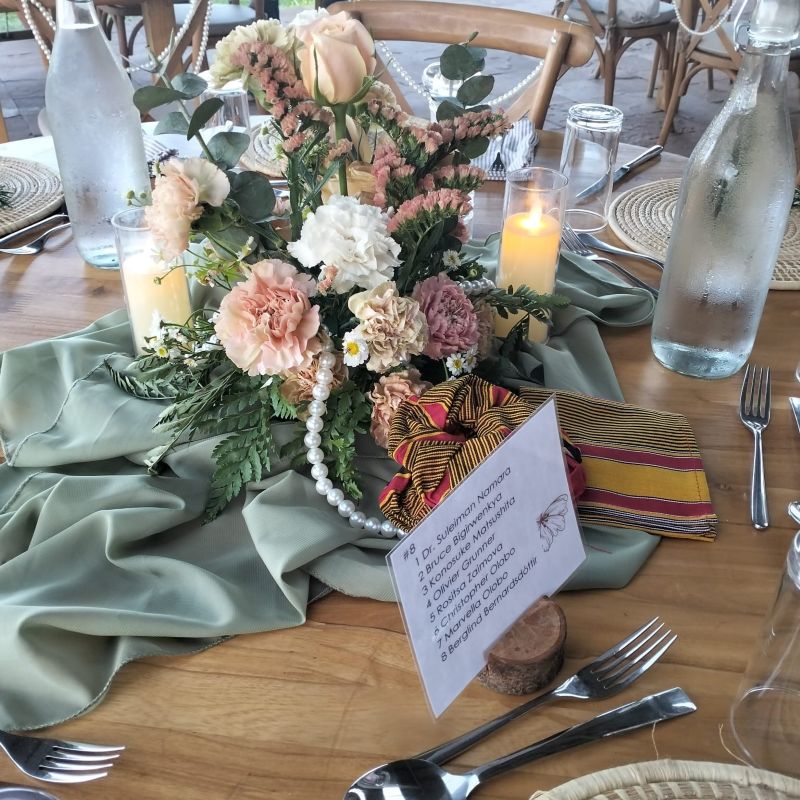
A well-briefed decor planner turns a budget into a world. The brief always comes first.
See the Spring-Inspired Decor We Delivered for Fred and Jamie’s Wedding
See the Luxury Safari Decor We Delivered for Claudia and James in Laikipia
7. The wedding day: A framework for staying in control
The wedding day needs its own run sheet, a minute-by-minute document shared with every vendor, your MC, and your planner. Here’s the structure we use for every wedding we deliver.
| WEDDING DAY RUN SHEET FRAMEWORK | ||
| Time Block | What Happens | Who’s Responsible |
| Setup crew call time | Venue access, furniture placement, linen dressing, tent setup | Decor planner, furniture vendor |
| Florals installation | Centrepieces, ceremony arch, entry feature, table flowers | Florist, decor planner |
| AV and DJ setup | Sound check, lighting rig, DJ equipment test | AV team, DJ |
| Bridal team call time | Hair and makeup starts (bride is always last) | Hair and makeup team, maid of honour |
| Groom preparations | Groom and groomsmen dress and depart for venue | Best man |
| Guests arrive | Ushers in position, welcome drinks, seating guidance | Ushers, MC |
| Ceremony | Bridal procession, vows, rings, signing | Officiant, MC, photographer |
| Cocktail hour | Guests move to cocktail area, canapés served, couple photos | Catering team, photographer |
| Reception entrance | Couple announced, bridal party procession, first dance | MC, DJ |
| Speeches and toasts | Parents, best man, maid of honour, couple — as per program | MC, speakers |
| Dinner service | As per caterer briefing: plated or buffet | Catering team, MC |
| Cake cutting | Cued by MC, photographer in position | Couple, MC, photographer |
| Entertainment and dancing | Band or DJ set, open floor | DJ, entertainment |
| Close and departure | Last dance, couple exit, vendor breakdown, venue handover | Planner, venue manager |
Planner’s tip: Appoint one person as the day-of point of contact for every vendor. Your wedding planner if you have one, or your most reliable and calm family member if not. Every vendor calls this one person. Not the bride.
8. Alternatives: Elopements and intimate weddings
Not every couple wants a large multi-event wedding journey. If the traditional format doesn’t suit you because of budget, temperament, or a desire for something more intentional and personal, there are genuinely beautiful alternatives.
Elopement weddings in Kenya
An elopement in Kenya today isn’t about running away. It’s about choosing an experience over an event, a small, deeply personal ceremony in a remarkable location, with the people who matter most and nothing extraneous. Kenya’s landscapes make it one of the most extraordinary elopement destinations in the world.
The Complete Guide to Planning a Safari Elopement in Kenya
See Claudia and James’s Magical Elopement in Laikipia
Garden weddings
A garden wedding in Kenya, done well, is one of the most beautiful formats available. The highlands, coast, and Rift Valley offer garden settings with a natural grandeur no indoor venue can replicate. The key is choosing a venue whose character supports your vision, planning your weather contingency carefully, and letting the landscape do the design work it wants to do.
See How We Planned Kena and Anne’s Garden Wedding at Zereniti House, Limuru
See How We Styled Tim and Dede’s Elegant Wedding for 100 Guests at La Mada Hotel
9. Working with Lucidity Africa Events
We’ve been planning and delivering weddings and events across Kenya for over twelve years. In that time we’ve worked across every budget tier, every venue type, every cultural tradition, and every planning scenario including the three-week ones.
What we bring to your wedding isn’t just organisation. It’s a design language, a network of trusted suppliers, a decade of knowledge about what works in Kenyan venues and what doesn’t, and the calm that comes from having solved every type of problem this industry produces.
| WHAT LUCIDITY AFRICA EVENTS OFFERS | |
| Service | What’s Included |
| Full wedding planning | End-to-end management from engagement to the morning after. Budget building, vendor sourcing and management, design brief, timeline, coordination, and on-day delivery. |
| Décor and styling | Bespoke design, full decor installation, florals, furniture, lighting, table styling, entry features, and signage. |
| Partial planning | Support where you need it most: vendor sourcing, contract review, design briefing, or on-day coordination only. |
| Event furniture and décor hire | Extensive inventory: tents, tables, chairs (bentwood, chiavari, ghost), linens, centrepiece props, lighting, and statement pieces. |
| Traditional ceremony planning | Full setup and coordination for Ruracio, Kuhanda Ithigi, and other traditional ceremonies across Kenyan cultural traditions. |
| Corporate and cultural events | Brand activations, product launches, conferences, and cultural celebrations. Same rigour, different context. |
View Our Full Event Planning Packages and Pricing for 2026
Ready to start planning your wedding in Kenya?
Whether your date is eight months away or six weeks, we’d love to help you build something extraordinary. Tell us your vision, your guest count, and your date. We’ll tell you exactly what’s possible and how we’d approach it.
Your first consultation is completely free and there’s no obligation. We respond within two hours.
Free consultation · No obligation · WhatsApp or call: 0721 771 185